Don't be afraid! Christ lives and wants you to be alive. He is the true beauty and youth of this world. Everything He touches becomes young, new, full of life and meaning (cf. Apostolic exhortation. Christus vivit, 1). This is exactly what we see in the Gospel scene, in which the Lord asks two disciples following Him: »What are you looking for?«. And they answer: »Rabbi, where do you live?« And Jesus tells them: »Come and you shall see « (cf. Jn 1,35-39). They came, they saw, and they stayed. The experience of meeting Jesus was so imprinted in the disciples’' memory that one of them even recorded the time of the meeting: »It was around four o'clock in the afternoon« (v. 39).
The Gospel describes how, after being in the house of the Lord, the two disciples became »mediators« who made it possible for others to meet, know and inherit Him. Andrew immediately went to share his experience with his brother Simon and brought him to Jesus. The teacher, seeing him, gave him the nickname: »Kefa«, ie. »Rock«, which will become the personal name of Peter (cf. Jn 1: 40-42). This shows how in the encounter with Jesus, we become a new person and we receive a mission to pass on the experience onto others, but with a view always focused on Him, on the Lord.
Dear youth, have you met this look of Jesus asking you: »What are you looking for?« Have you heard his voice speaking to you: »Come and you shall see«? Have you felt the urge to set off? Spend this time with Jesus, to be filled with His Spirit and thus become ready for the adventure of a lifetime. Set off to meet Him, stay with Him in prayer, confide in Him as He knows the human heart.
The beautiful call of the Lord: »Come and you shall see«, which was conveyed to us by the young and beloved disciple of Christ, is also addressed to all future disciples. Jesus invites you to meet Him, and this Festival is an opportunity to »come and see«. The word »come«, in addition to pointing to bodily movement, has a much deeper, spiritual meaning. It points to the course of faith whose ultimate goal is to »see«, that is, to experience the Lord and thanks to Him to see the full and final meaning of our existence.
The great example of the Church of the Young Heart, ready to follow Christ with new freshness and fidelity, always remains the Virgin Mary. The power of Her »yes« and Her »let it be unto me« which she said before the angel delights always. Her »yes« means to participate and take risks, without any guarantee other than the certainty in the knowledge that she is the bearer of the promise. Her »Behold the handmaid of the Lord« (Lk 1,38), the most beautiful example that tells us what happens when a man, in his freedom, surrenders himself into God's hands.
Let this example inspire you and be your guide! Mary is the Mother who watches »over us, her children who walk through life often overwhelmed by fatigue, needy, but with the wish for the light of hope never to be extinguished. This is our wish: may the light of hope never go out. Our Mother sees these pilgrim people, the young people who love, who seek in silence, despite the fact that there is so much noise, chatter and distraction « (Christus vivit, 48).
Dear youth, »run attracted by that Face we love so much, whom we worship in Eucharist and recognize in the body of our suffering brothers and sisters. May the Holy Spirit encourage you in that race in which you go forward. The church needs your momentum, your intuition, your faith « (op. cit., 299). In this race for the Gospel, inspired by this Festival as well, I entrust you to the intercession of the Blessed Virgin Mary, invoking the light and the power of the Holy Spirit so that you may be true witnesses of Christ. Therefore, I pray and I bless you, asking you to pray for me, too.
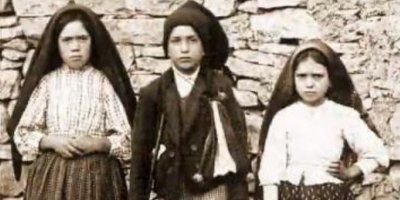
]]>Two relics that belonged to saints of the Fatima apparition were stolen from a church in Verona, Italy, while they were being taken around the country for veneration.Fr. Andrea Ronconi, who is the priest at the Jesus Christ Divine Worker parish in Verona, told the Associated Press on Thursday that small pieces of clothing belonging to the Portuguese shepherd children made saints in 2017 were stolen on Wednesday.
Ronconi said he was “heartbroken and mortified” by the loss. The theft also included copies of a crown and rosary of the Fatima Virgin Mary statue.
The articles of clothing belonged to Saints Francisco and Jacinta Marto, who had several visions of the Virgin Mary at Fatima in 1917. They were canonized on May 13, 2017.
Police are looking for two suspects.
]]>We are pleased that we can now offer you products coming directly from the place of prayer, atonement and one of the world’s largest Marian centre.
The new web shop is an essential part of the Medjugorje-info.com, a website that has been publishing Our Lady’s messages for many years, providing the latest news from Medjugorje whilst aiming to depict the unique prayerful and spiritual atmosphere of a place that has been consecrated by Our Lady.
We want to offer our merchandise to the people throughout the country who are not able to come to Medjugorje but yearn for such experience and rejoice in buying religious tokens for their home. Here you can find a gift for your family and friends, as we are certain that they will be pleased to see you have kept them in mind by buying a gift contributing to spiritual growth. However, should you fail to find an item that interests you, feel encouraged to send us a message and we will try to locate it for you. All suggestions and comments are also welcome.
Please note that our selection contains only high quality merchandise that you can find in local shops, with most of them being made in Medjugorje. Please be noted that by purchasing these products you will be helping our cause, as well as a number of local families that live and work here. Our main goal is to promote local art, trades and small businesses, the literature that has preserved the place’s distinctive identity and the spirituality that has impacted millions of lives. With our supply of Medjugorje souvenirs, books, rosaries and numerous other items, we want to illustrate at least a small part of the feeling that comes with the blessings provided to all visitors of Medjugorje
Our shop is in the process of stocking new content, with more products coming soon, so make sure to revisit our page regularly. Purchasing the memorabilia through our webshop is safe and simple, without the possibility of abusing your data, giving you a unique shopping experience. Should you have any questions or comments, feel free to contact our staff! Send us an email on [email protected], and we will answer promptly. The shop is open 24 hours a day, 365 days a year. View the merchandise we offer and make your purchase any time you want! We wish you a pleasant online shopping!
You can also follow the latest postings on the Facebook page: Medjugorje-shop
]]>The priest said that the news had been communicated to him by Carlo’s mother: “Dear ones, I received today from the mother of Carlo Acutis the wonderful news that the body of the venerable youth, who died giving his life for Pope Benedict XVI, is INTACT.”
He also announced that the body would be taken to the Capuchin monastery in Assisi, and eventually taken to the old church of St. Mary Major in Assisi.
One of Carlo’s most significant computer ventures was cataloguing all the Eucharistic miracles of the world. He started the project when he was 11 years old and wrote at the time, “The more Eucharist we receive, the more we will become like Jesus, so that on this earth we will have a foretaste of Heaven.”
He then asked his parents to start taking him to all the places of the Eucharistic miracles, and two and half years later the project was completed.
Father Tenorio’s original Facebook post was later taken down and a subsequent post said that the announcement was meant to be personal, and shouldn’t be considered an official declaration of the miracle.
The discovery was made during the exhumation of Carlo’s body that is part of the recognition of his remains by the Congregation for Saints’ Causes, in the development of the canonization cause.
UPDATE: The postulator of the cause, Nicola Gori, asked that the medical exams be awaited before something definitive can be said regarding the state of the body of the young Carlo. aleteia.org
]]>He admits that his vocation to the priesthood was unexpected, a sudden epiphany. Responding to the Divine call, in 1969 as a medical doctor he entered the Pallottine Seminary in Ołtarzew. In 1970 he took his first profession in the order and became a member of the Society of the Catholic Apostolate (Pallottines). As a seminarian he co-founded the Mission Group (in operation at the Pallottine Seminary to date). Ordained to the priesthood on 16 June 1974 by Bishop Władysław Miziołek. Fr. Henryk Hoser left for a mission in Rwanda one year after his ordination, having prepared himself for missionary work in Africa in France; in Paris he attended courses of the French language and of tropical medicine.
“I have never regretted becoming a physician and have never doubted my priestly vocation and consecrated life”, observes Archbishop Hoser. At the same time he admits that “both these fields are ‘absorbing’ and ‘jealous’, require exclusivity and cannot be handled in splendid isolation”. For 21 years Fr. Hoser combined the two fields as a missionary in Rwanda and Zaire. He started off as a curate in Kigali, working at the same time the district hospital in Kabgayi and the university hospital in Butare.
In 1978 he founded a Gikondo Health Centre in Kigali, which he led for 17 years, and the Rwandan Family Action for the dissemination of natural methods of family planning. He was also the head of the Association of Medical Centres in Kigali and the head of the epidemiological centre for AIDS monitoring. He was a parish priest, chaplain of families and formation sessions for the apostleship of secular communications media. For a few years a secretary of the commission of the local bishops’ conference for health and of the commission for the family.
In 1981 Fr. Hoser became the superior of the Missionary Delegation of the Pallottines in Rwanda, and seven years later the first superior of the newly established Regia of Rwanda, Zaire ad Belgium (1988–1991). A former chairperson of the Conference of Superiors of Religious Orders in Rwanda.
In 1994 he participated in the Special Synod for Africa as an expert on the issues of development and family problems. That very year John Paul II made him an apostolic visitor in Rwanda and eight neighbouring countries. During the war between the Hutu and Tutsi tribes in April 1994, the papal nuncio had to leave Rwanda and Fr. Hoser as an apostolic visitor had the prerogatives of the nuncio to visit the dioceses and appoint apostolic administrators for the vacant dioceses, helping the bishops and the clergy to resume pastoral work.
Three bishops were killed at that time and the fourth one left for Congo, unable to return. 4 out of 9 dioceses were vacant. Fr. Hoser was entrusted with offering assistance to the local Church in overcoming the tragedy of the civil war. At the end of 1994 Fr. Hoser was assisted by a chargé d’affaire of the nunciature, whose role was to follow the social and political issues in Rwanda, and Fr. Hoser was able to focus solely on pastoral duties. In 1996 the apostolic nuncio, another Pole, Archbishop Juliusz Janusz, was finally appointed. Fr. Hoser remained for a few months in the nunciature as the nuncio’s aide and collaborator. Having completed his mission as a visitor, he left Rwanda. Commenting on the trials of Catholic priests and nuns, he stressed that there are many question marks about them and that prison sentences were granted to both criminals and innocent people, which made these trials “political”.
Upon his return to Europe, he was the superior of the Regia of the Divine Mercy in France (in the years 1996–2003) and a member of the Council for the Missions of the French Conference of Superiors of Religious Orders. At this time, on behalf of the Congregation for the Evangelisation of Peoples, he visited a number of times seminaries in the mission countries. In 1998 he led a four-day retreat for Polish bishops in Jasna Góra. Since 2004 he was the superior of the Pallottine mission work in Brussels and a pastor in the EU structures.
In 2001 he co-founded the African Federation of the Family Action and became its secretary. In collaboration with Georgetown University, Washington, D.C., he developed an extended lactation method LAM–9.
On 22 January 2005 John Paul II appointed Fr. Henryk Hoser adjunct secretary of the Congregation for the Evangelization of Peoples and president of the Pontifical Mission Societies. He also appointed him a titular archbishop of Tepelte.
Interestingly, the nomination for the Pallottine was announced on the memorial of the founder of the order, St. Vincent Pallotti, and Fr. Hoser is the first Polish Pallottine to be made archbishop. He was consecrated in Rome on 19 March 2005. Archbishop Hoser’s episcopal motto comes from the first Epistle of St. John: Maior est Deus (God is Greater). The bishop’s coat of arms features a flame of faith and love, both of which he acquired in his family home and in the family of the order. Another element of the crest is a star, a symbol of evangelisation, of preaching the Gospel till the ends of the earth.
As deputy secretary of the Congregation for the Evangelisation of Peoples, together with the secretary he was the closest collaborator of the cardinal prefect presiding over the congregation. At the same time he was ex officio the chairman of the Pontifical Mission Societies. This pontifical institution is in the service of the Catholic Church and promotes and collaborates with the ad gentes missions. The Pontifical Mission Societies is composed of the following: Pontifical Society for the Promotion of the Faith, Pontifical Society of St. Peter the Apostle, Pontifical Mission Society of Children, and the Pontifical Mission Union. Archbishop Henryk Hoser SAC was the second Pole in the Congregation at such a high-ranking position, following Cardinal Mieczysław Ledóchowski, who in the period 1892-1902 was the prefect of this Congregation.
On 24 May 2008 Benedict XVI appointed Archbishop Henryk Hoser Bishop of Warsaw Praga.
Within the Polish Bishops’ Conference he is chairman of a Team of Experts for Bioethics. A member of the Pastoral Commission, Commission for the Missions and the Council for the Family. A member of the Work of the New Millennium Foundation Council. In 2014 elected to the Permanent Council of the Polish Bishops’ Conference. In 2009 Benedict XVI appointed him consultor of the Congregation for the Evangelisation of Peoples. That very year the Pope appointed him a member of the special Second Synod for Africa. In 2015 he took part in the Synod of Bishops for the Family as one of three Polish members of the Episcopate besides Archbishop Stanisław Gądecki and Bishop Jan Wątroba, Bishop of Rzeszów and chairman of the Polish Bishops’ Conference Council for the Family.
]]>Danuta Liese, Poland: Is it possible for a priest from Poland to be in the service of pilgrims in this parish all the time? Not just occasionally, as a guest, but permanently?
- I think it is up to the Provincial priest to talk to the provinces in Poland so they would send a priest who would be here all the time, as it is case with other priests.
Sanja Pehar, Radio MIR Medjugorje: After the experiences you received in these days, where do you see Medjugorje in the new evangelisation that the Church is emphasising so much?
- I think that Medjugorje is already in the new evangelisation. The numbers I have given prove that. Also, there is increasing dynamics among the pilgrims, meaning that the needs will grow too.
Ivica Đuzel, Croatian Radio TV: I found information on Internet that you spoke to the visionaries last week, with people who had, we could say, that intimate encounter. What was their impression on you?
- It is correct that the contact with the visionaries is a part of my mission, but not in the sense of a deeper investigation, as it is up to Doctrinal Commission led by Cardinal Ruini. The visionaries were in Vatican and they spoke about their experiences there. I had chance to meet some of them here in a normal, very immediate contact. We should not forget they are no longer “boys and girls”, they are no longer children. Some of them are even grannies now. To respect their role, we should see that they are immersed in a normal, family life, in their professional life, they need to take care of their children and grandchildren, and their care makes them similar to all of us. Some of them are ill, some worry how to provide for a life, and so on. It is normal life, I would say. They – according to what they say – have had a privilege of interior apparitions. It is not my role to give my opinion on whether these apparitions are authentic or not. The Church has not yet made a statement about that.
Ivan Ugrin, Slobodna Dalmacija: Our Lady said in one message here that she came to continue the work she started in Fatima…
- You can read the history of recognised apparitions. I can mention, for instance, La Salette – half of the 17th century, Rue du Bac, Lourdes, Fatima, Banneux in Belgium – in the year when Hitler took the power, do not forget that, but also Guadalupe in the South America – colonial quest of the American Indians… All those apparitions have one element in common, the Blessed Virgin Mary’s invitation to conversion, to renounce sin, and each shows the challenges of every period. Finally, I would like to mention the apparitions in Kibeho. I lived in Rwanda for 21 years and I participated in the work of Commission of doctors for the apparitions that happened a year after Medjugorje. The Blessed Virgin Mary had already showed the spectrum of the genocide that took place 12 years afterwards. That was one warning. The message is similar to the message here in Medjugorje, it is invitation to conversion, to peace, and those apparitions were recognised by the Church. Those places are like sister towns, I would say, according to the historical context and nearness of the period when they took place. There were many doubts whether the visionaries were genuine or not, whether they were saying fairy tales or not, and so on. Some of them were, actually, rejected. Therefore, I would like to invite you to have patience, because as the issue is more complex, it takes more time to come to valid conclusions.
Paolo Brosio, Mediaset Mondadori: I saw your photograph on Apparition Hill next to the Statue of Our Lady and I was deeply moved by that. There are stories in Italy how Cardinal Ruini concluded the work of the commission after three and a half years and was able to verify that the apparitions in the first days and in the first months were genuine. How do you feel about those conclusions? Have you read the final reports of the Commission?
- Unfortunately, I did not read material of that Commission, as it was not released. Upon my return to the Vatican, I could have access to it, or at least talk to the Cardinal Ruini, but for the time being I cannot say anything. My mission is not only to talk to the people who are working here, who are responsible or not responsible for the situation here, but also to visit places of pilgrimages. That is why I climbed that, not so easy path to the statue of Our Lady, that everyone should climb simply because the statue of Our Lady is there. I met a group of pilgrims there, some of them were from Poland, and I spoke to them briefly about Marian devotion. The press had, of course, already stated that I took a group of pilgrims there, which is not the truth.
Darko Pavičić, Večernji list: When you talk about the apparitions in Medjugorje, you talk about the apparitions, not about the alleged apparitions. Do you believe that here, it is the case of the apparitions, and what was the topic of your meeting with Bishop of Mostar, Ratko Peric, who does not believe in the apparitions and who is denying them?
- It is clear that I sustain from giving my own judgment about this as I am not familiar with all of the details, I do not know the huge work done by Ruini’s Commission. If I speak about the apparitions, it is because that expression is used here. I do say that with quotation marks, but when I speak, quotation marks cannot be seen. I, as well as you, expect the final saying of the Commission, particularly of the Holy Father who will have his word on this.
Ivan Pavković, Al Jazeera: How does Pope feel about Medjugorje, about the apparitions and the fruits you spoke about?
- That is a very good question, but obviously, I do not know how the Pope feels about this. He did not say that to me. So, we are to wait, as the Pope is surely reflecting on all investigated materials and the job that was done in the process, but I think his judgment is going to be influenced by the fact that Medjugorje is such an important place in the perspective of the new evangelisation. I think this can be very important when the final decision is made. I do not speak about the Last Judgment, but about the final decision.
Ines Grbić, LaudatoTV: In the statement given prior to your coming here, you said you would have to perform your mission in completely different conditions and circumstances. I would like to know what kind of circumstances those are and what is the way that differs from your previous way of working? You said that these apparitions of Mary are significantly different than the previous ones. What is so specific and different here?
- Surely, madam, you noticed the specific element of the apparitions that are in a new form, I would say, something that was not known in the past in this dimension. Firstly, there is duration of what we refer to Medjugorje apparitions. This is something that lasts for 36 years now. Medjugorje visionaries, is as when the entrance antiphon says „sine fine dicentes“, even though we know from the lives of the saints that some of them had the apparitions all of their lives. The second specific element is the number of these apparitions. Some have calculated even 47 000 individual apparitions. Six visionaries have personal apparitions, and perhaps that number could be calculated after 36 years, I do not know. Furthermore, these apparitions are not tied to one place. In Lourdes, the Blessed Virgin Mary always appeared in the grotto. In Fatima, she appeared above the oak tree that grew there. Here, according to what the visionaries say, the apparitions take place where the person is, at home, while travelling, in the church, and so on. Those are the specific elements that make the final evaluation process more difficult.
]]>
Day has since posted a full rendition of the song on her You Tube channel and has promised her new fans that she’ll post more.
{youtube}WqaV516W8MQ{/youtube}
]]>Now that the voices are silenced
and the crowded world of projects
and overwhelming noise is hushed,
here, at my bed, I seek your consolation.
My spirit roots for you, as an infant
seeks out the breast,
seeks you as a child seeks
the succor and embrace of a father —
the parent who will whisper,
“Shh, I am with you,”
and bring solace to the soul
with an unconditional love.
I believe in your love,
and I hope in you,
and I pray you will grace me
with the gift of faith, unfailing,
the gift of wisdom, beyond my instincts,
the gift of trust, which is so hard.
I give glory and thanks to you
for this day as it ends,
and beg that you will give me eyes to see
that in all things, you have been with me:
in what was difficult, and what was easy,
in what was anxious and what was peaceful.
In those times I sought you out,
or forgot to,
You were with me, still, and I thank you.
Today, I failed in love; you know this.
I beg you to forgive me.
Today, I lost my temper; you know this.
I beg you to forgive me.
Today, I was selfish; you know this.
I beg you to forgive me.
Today, I felt desolate, unsure, and afraid;
I beg you to reach me, and to teach me again
that you love me, and are near.
That you are, O God, the safest of safe places,
the wayside resting place,
where I may catch my breath,
and seek you out, before going on.
Before I rest tonight,
I must thank you for your love,
beg your pardon for my failings,
and your shelter
from my interior storms.
O my Lord, at this moment, all is calm,
and sleep beckons me.
It is your world!
I place all of my concerns into your hands,
and all of my fears into your Sacred Heart,
the Self-immolating gift that is never consumed.
I believe in you.
Although I cannot understand
all that is before me,
I know all things work toward
the purposes of your mysterious plans
for my own good.
And I trust in this.
And I beg for the gift and grace
to trust you even further,
day by day.
I ask this in the name of Christ Jesus,
seeking the prayers of Mary, his Mother,
and of my guardian angel and patron saint (Name).
I will lie down in peace and sleep comes at once
for you alone, Lord, make me dwell in safety. (Psalm 4:9)
Amen.
]]>The Word of God that we have heard today speaks of the resurrection and shows us three perspectives of resurrection, three views on resurrection. The first one is historic. We know that Jesus Christ the Son of God and the Son of man, lived on this planet, in the Holy Land of Palestine. We also know that it was announced by prophets that he was going to be born, just as the prophet Ezekiel did, that we have just heard today. He brings the words of God who is telling us: “I am now going to open your graves and I will lift you up”, and he repeats “I will open your graves and raise you from your graves.” That is a prophesy, he already sees the arrival of the Messiah. We know that Jesus died and rose from the dead, which is the foundation of our faith. Without that foundation of Jesus’ Resurrection, our faith would be empty.
The second perspective is liturgical, it is the way of the Lent. For forty day we prayed and we will continue to pray, we fasted and we shall continue to fast. We have become more generous towards others and we are going to do all the more in the future.
The Spirituality of Lent is very well known here, you know it very well. Therefore, the liturgical path that is preparing us to reach the third perspective, that is the third view of resurrection and that is the perspective of our life, the life of each one of us. We live for resurrection, we march towards resurrection, we go through death in order to resurrect. The final goal of our earthly life is resurrection. During this path we are to resurrect, anticipating that final perspective. Our partial resurrection is our conversion. Jesus says, and repeats, there is a death of a body, but he also speaks of a death of the soul. The death of a soul is more serious, a far greater threat, because it is then we might die for all eternity. Therefore, each time when we continue to convert ourselves, we are turning ourselves towards God who is the source of life, the source of Eternal Life. He is also the path to love, for God is Love. It is merciful love that brings us inner peace and the joy of life.
However, there are two conditions; the first one is faith. Jesus, before performing miracles, requested faith. “Do you believe I can do that? Yes, Lord, I believe! I strongly believe! Then, it is that faith that opens our heart for conversion, that opening through the sacrament of confession, it is sacramental confession, when our hearts are cleansed, opened and filled with the Holy Spirit and the Holy Trinity. Christ confirms that to us in the Book of Revelation, He says that he is standing at the door of our heart, knocking on it. If the Most Holy Trinity dwells within it, we become the Temple of God, His own shrine.
I would like to return to the historic perspective. In the days ahead of us, we are going to read in the Gospel, we are going to see that Jesus’ enemies, are throwing their nets around Jesus, threatening Jesus all the more every day. He knows and He is aware of that. He knows what His disciples and apostles do not know. There is somebody who follows Him on that path of suffering, His Passion. It is His Mother, the Blessed Virgin Mary. She is always near, She suffers with Him, She feels her helplessness. St. John Paul II spoke about her faith which was so hard. Often, we refer to her as to Our Lady of Seven Sorrows. Throughout Her life, She suffered so much pain and Her suffering is growing together with Jesus’ towards the Passion of the Way towards the foot of His Cross. On the Way of the Cross at the fourth station we meditate Jesus carrying his Cross, encountering His Mother and the Gospel tells us that She was the witness of His horrifying death on the Cross. In Her own arms, She received the massacred body of Her Son. The Christian tradition teaches us that before Mary Magdalene, Mary encountered Risen Christ.
In the Perspective of the life of each one of us, the perspective of resurrection, of course the Blessed Mother is there as well. She accompanies us, She follows us, She participates in our suffering and our pain. If we live in the perspective of God, she is helping us to become saints, She is helping us on our path of conversion and we have to experience that spiritual presence of Hers. We call Her, especially here, the Queen of Peace. In the litanies of the Blessed Virgin Mary, there are some twelve titles when we call Her Queen and Queen of Peace is the last. Mary is the Queen. When we contemplate the Glorious mysteries of the Rosary, we speak of her as the Queen of Heaven and Earth. We meditate Her Assumption as well as Her Crowning as the Queen of heaven and earth. She participates in all the characteristics of the Kingship of Her Son, the one who was the creator of heaven and earth, His Kingdom is universal. She is everywhere and we are allowed to appraise Her and revere Her everywhere. We thank Her for Her constant presence in the life of each one of us. She is by each one of us, always present.
The Queen of Peace, it is the fruit of conversion, She brings peace into our hearts and thus we become peaceful people, especially with our family, with our environment, society, our country. The peace in the world is threatened. The Holy Father, Pope Francis said ‘the third world war is partially already here’ and the most terrible are civil wars, those that take place among people that live in the same country.
Dear brother and sisters, for twenty-one years I lived in Rwanda, Africa, In 1982 Our Lady was appearing there and She predicted the genocide in Rwanda ten years before it actually happened. When She gave that message, nobody understood it. During three months of the genocide one million people were slaughtered. The apparitions of Blessed Mother in Rwanda were already recognised. She introduced herself as Mother of the Word, Mother of the Eternal Word, also in the perspective of the lack of peace.
Therefore, that honoring, that is so intense here, is so important for the entire world. We pray for peace because the destructive forces are tremendous throughout the world. It is tragic that families, societies, marriages, countries are in conflict, we need a Heavenly intervention and the presence of our Blessed Mother is one of these interventions. It is God’s initiative.
Therefore, I would like to encourage and fortify all of you, on behalf of the Pope as his Emissary. Let us spread peace throughout the world through the conversion of hearts.
The greatest miracle of Medjugorje are the Confessions here. The Sacrament of Reconciliation and Mercy and forgiveness. It is the Sacrament of Resurrection and I want to thank all of the Priests, who come to hear confessions of the faithful. I have seen today over 60 Priests at disposal for confession, serving people of God.
I spent many years in Western countries, France, Belgium and I would say that individual confession has practically disappeared in the Western world, with the odd exception here and there. Therefore, the heart of man is closed. The world is becoming dry, evil is strengthening, conflicts are multiplying, therefore, let us all be the apostles of good news, conversion and peace in the world.
As I have learned here, I have heard these words, non-believers are those who have not yet experienced the love of God. When the love and mercy of God touches you, you cannot resist it, therefore we are going to participate together with those who save lives. So it happened that we are witnesses of that what saves lives. We are the witnesses of that what saves the world.
As the brothers Franciscans told me, pilgrims are coming here from eighty different countries throughout the world. This calling has been spread to the ends of the world, just as Jesus said to the Apostles, sending them into the world. You are witnesses of the love of Christ and the love of His Mother and the love of the Church.
May God strengthen you and may He bless you. Amen.
“The Holy Father is obliged to protect the devotion and faith of the many people who visit this small place in Bosnia and Herzegovina, to watch over them and to guide them. This is all going to be the center of the mission of Archbishop Hoser, explains Fr. Salvatore Perrella, the President of the Pontifical Theological Faculty of Marianum in Rome. He is a member of the Order of Friars Servants of Mary, Docent of Dogmatics and Mariology, a religious, who was also member of the International Commission founded by Benedict XVI for Medjugorje.
Perrella does not speak about the events, he knows well, as he says it is “with the purpose of respecting papal secrecy.” However, he explains, the role the Special Envoy of the Holy See is going to have. “Those who go there, he says, cannot simply be led by tourist agencies or be guided by one person from the Church. Pope Francis, in a special way, cares about the pastoral dimension of this place that attracts each year about 2 million ‘pilgrims’ from all over the world.”
“Here, we are encountering the phenomenon that has a worldwide dimension,” says Perrella. This is the case that deserves attention due to its complexity. “When the Polish Archbishop was appointed”, continues the Servant of Mary, “The Pope clearly sent a message that the pastoral dimension is not irrelevant and his wish is to protect the faithful.”
Hoser, 74-year old bishop of Warsaw – Praga, graduated as a doctor of medicine, he used to be a missionary in Africa, and Deputy Secretary of the Congregation for Evangelisation of People. His mission in Medjugorje will last until the summer. “In those months he will be observing, listening and noting the events there and then he will entrust all to the Holy Father. That does not imply that the Pope will make a statement about the authenticity of these apparitions. It was Benedict XVI, who wanted to establish a Commission for investigation of Medjugorje within the Congregation for the Doctrine of the Faith, and he clearly knew how the phenomenon of Medjugorje cannot be resolved with one “yes” or “no”. He then adds:
“ When it comes to the case of such great dimensions, it is good for the local bishop to have the support of the Holy Father through his Special Envoy.”
At the time when Archbishop Hoser was about to start his mission, the Bishop of Mostar – Duvno Diocese, Ratko Peric, of which, Medjugorje belongs to his Diocese, published on his Diocesean website, a notice in which he stated that “the apparitions of the Blessed Virgin Mary are not true”. “The statements of Bishop Peric are his personal opinion. This opinion is authoritative, as he is the local bishop, but it is still his personal opinion, especially if we would like to observe that out of the perspective of doctrinal teaching, of what obliges faithful to believe or not to believe”, states Fr. Matteo Roggio, missionary of Our Lady of Salette, Docent of Mariology at Marianum Theology Faculty and Docent of Dogmatics at the Catholic University of Rome. The author, along with Fr. Perrella, of the book “Apparizioni e mariofanie” is reminding us that “judgment about Medjugorje does not belong to the local bishop nor to the National Bishop’s Conference, but to the Congregation for the Doctrine of the Faith, and finally to the Holy Father who is the guarantee of honouring of Our Lady in the Church.
It was the bishops of the former Yugoslavia who asked for the intervention of the Holy See, that prompted Pope Benedict XVI, to establish the International Commission for investigation of Medjugorje in 2012. The Local Council of Bishops were divided, added Roggio. That should not be surprising, as this is the issue involving the basic dimensions of the faith. “The Papal Commission, with the President Cardinal Camillo Ruini, made up of 17 members, including cardinals, bishops, theologians and experts, completed their work on January 14, 2014, and according to Pope Francis “they did well”.
Medjugorje is a place that moves us by its spiritual fruits or perhaps by the “unusual” life of the so - called visionaries, for instance. “The course of history gives us one ideal of the visionaries, who all immediately after the apparitions, consecrated their lives to the Lord – notices this religious servant. Standard norms about those phenomenon published in 2012 by the Congregation for the Doctrine of the faith, do not tell us anything about the way of the life of so called visionary: what is important is that such person lives Christian life in his own time.” Pope Francis in his statements mentioned on several occasions “visionaries” related to so called revelations of Our Lady “Postmistress”. “Those words were part of a wider context about the Christian identity”, says Roggio. The faith does not depend on visions, but it depends on whether we choose Christ. For a number of years, pilgrims have been coming in greater numbers to Medjugorje. “The appointment of Archbishop Hoser confirms that the Pope trusts experiences of Christian people, concludes Docent. This is what we refer to as sensus fidelium – meaning – it is the ability of the people of God to recognise what comes from God, but also to recognise what does not come from the Lord“.
]]>This place of prayer is now famous in the whole world, and Holy Father is very interested in the development of devotion of faithful that takes place here. This is also part of my mission – to evaluate the pastoral activity that takes place here and to suggest some guidelines that should accomplish in the future. I come from the country that has special devotion towards the Mother of God. Mary is the queen of Poland. My wish to all of you is to make Mary the Queen of your lives. For the time being, this is just what I shall say”, said Archbishop Hoser who at the end invoked the blessing of God on all gathered in the church.
]]>„I came here because of the visit and mission of our Archbishop Henryk Hoser, who will be in charge of pastoral care in this parish. I wanted to bring some materials to the Polish faithful, but not just to them, rather to all those who are involved in the issue of Medjugorje”, said this young Polish journalist in his interview for radio Mir Medjugorje.
When asked about the reaction of Polish people when Archbishop Hoser was appointed as the Special Envoy of the Holy See for Medjugorje, he said: “They were all a bit surprised. They did not expect him to become Special Envoy for Medjugorje. I think everyone is really happy after this decision, as many faithful come here from Poland to pray and to do penance. All of them, in some way, need to have official standing of the Church regarding their pilgrimages to Medjugorje. I think this visit is a certain step in that direction, at least when it comes to pilgrimages to this place.”
In regards to his personal impression, this is what Jakub said: “This time I had opportunity to be here for a couple of days, as in 2015, I was here just for few hours. On that occasion we came from Sarajevo, as we were preparing news about the visit of Holy Father, but we also came to Medjugorje to make a report about this place. Next time I came here with my friends, but it was also for a couple of hours. I really had the opportunity to experience peace. Even if someone does not believe in the apparitions of Our Lady, when they come here, they can feel peace, love of God, silence and it is a place where one can talk to God and to himself. Even if a person comes on a business visit, like I did this time, there is still time to experience that peace. I was able to talk to many people, all I felt was peace, everyone was anticipating the visit of Archbishop Hoser, people were opened and prepared to help him in that mission. In regards to the apparitions, we are still awaiting for the official standing of the Church.”
]]>